8-page guide · candle calculations, guide 1
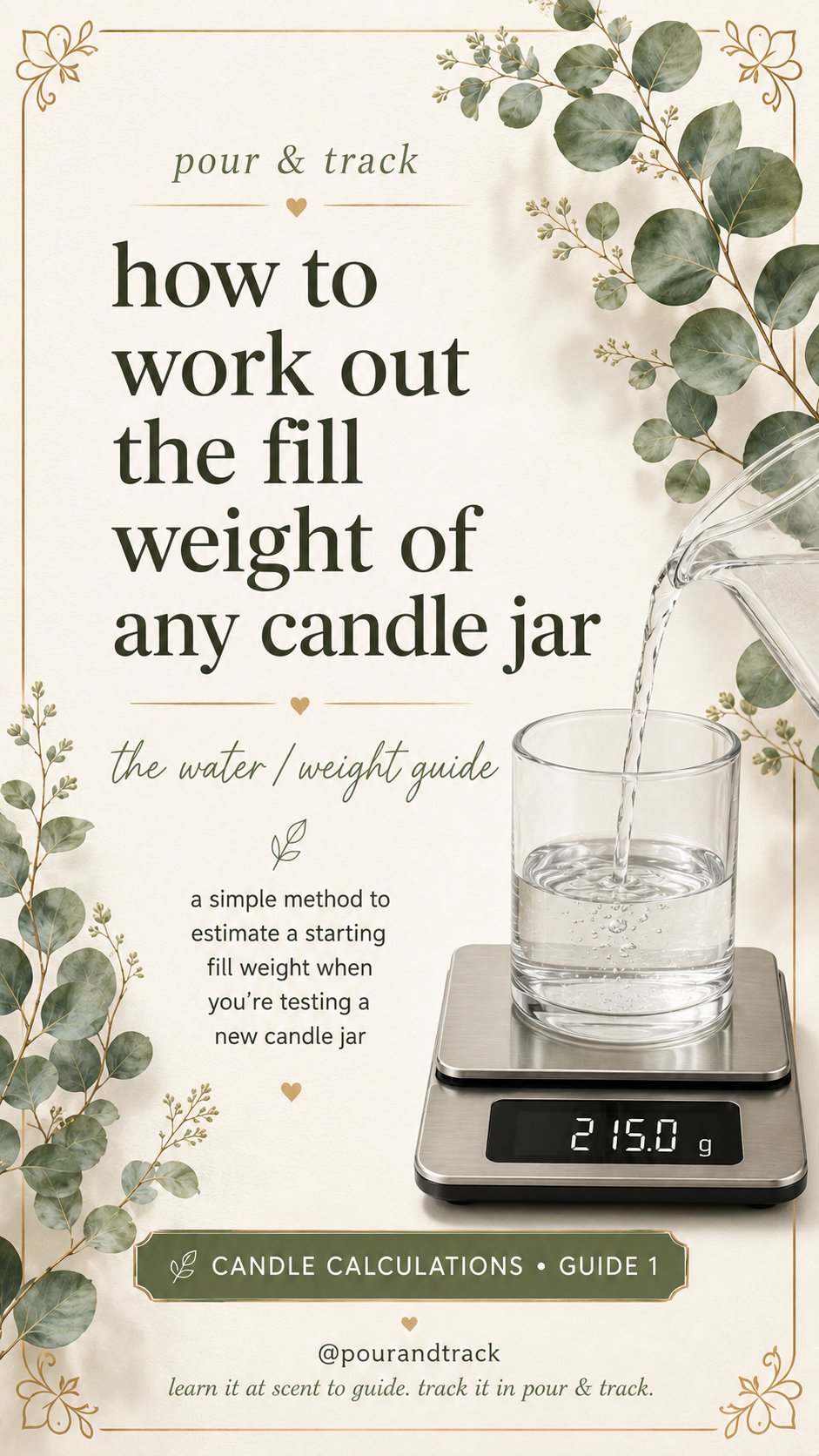
How to work out the fill weight of any candle jar
The water / weight guide — a simple starting estimate.
Most jars are listed in ml or cl, not grams — which tells you nothing about how much wax you need. This guide walks through the water method: weigh water to your chosen fill line, multiply by 0.86, and you have a rough starting quantity to work from before your first test pour. Water measures the space; it doesn't give you an exact wax weight.
When this guide helps
- ✦ Your jar is listed in ml or cl, not grams
- ✦ You don't plan to fill the jar right to the top
- ✦ You want a rough starting quantity before a test pour
- ✦ You want a clearer fill-weight record for future batches
What you need
An empty candle jar, digital scales, water, a jug or beaker, a marker or tape for your fill line, and a calculator. Choose your fill line first — don't measure to the rim unless that is how you plan to fill the candle.
The two steps
- 1.Weigh the water — jar on the scales, tare to 0 g, fill with water to your chosen fill line, record the water weight in grams. Example: 250 g.
- 2.Make a rough estimate — water weight × 0.86 ≈ estimated total candle mixture. So 250 g × 0.86 ≈ 215 g.
0.86 is not an exact rule. Different waxes and blends vary, supplier guidance should come first, and the answer is a starting point rather than a guarantee. Always confirm it with a real test pour.
Confirm it with a test pour
Use your intended jar, wax, fragrance percentage and wick. Let the candle cool fully, check the finished fill level, weigh the finished candle, then compare with the empty vessel weight to check net contents. For products sold to customers, keep proper quantity-control checks and full safety-testing records.
Record the result and save it
So you don't work it out twice: jar name and supplier, chosen fill line, water weight, rough estimate, actual test pour, confirmed fill weight, and notes for the next batch.
Rough estimate first, real testing second.
DownloadFree · 8-page guide · PDF
Save your tested fill weight inside Pour & Track so every future batch of that jar starts from a confirmed number.